Empowering healthcare facilities in Bhilwara with enterprise-grade cloud security to maximize revenue and eliminate operational bottlenecks.
Real-time encrypted backup
In the rapidly evolving healthcare landscape of Bhilwara, medical facilities are increasingly seeking robust, secure, and reliable digital infrastructure to manage patient data, streamline operations, and ensure regulatory compliance. On-Premise Hospital Software in Bhilwara represents a paradigm shift in healthcare IT, offering localized, secure, and highly efficient hospital management systems tailored to the specific needs of hospitals, clinics, and multi-specialty centers in the region. Unlike traditional cloud-only solutions that rely heavily on continuous internet connectivity—a challenge in certain parts of Rajasthan—on-premise and offline-first hospital software ensures that medical professionals have uninterrupted access to critical patient records, billing systems, and operational data. This localized deployment model guarantees complete data sovereignty, keeping sensitive Protected Health Information (PHI) within the physical confines of the hospital, thereby strictly adhering to the Digital Personal Data Protection (DPDP) Act 2023 and the Ayushman Bharat Digital Mission (ABDM) guidelines. By choosing a dedicated on-premise solution, healthcare providers in Bhilwara can mitigate cybersecurity risks, eliminate latency issues during high-volume OPD hours, and maintain complete control over their IT infrastructure, ultimately leading to enhanced patient care, optimized resource allocation, and sustained financial growth.
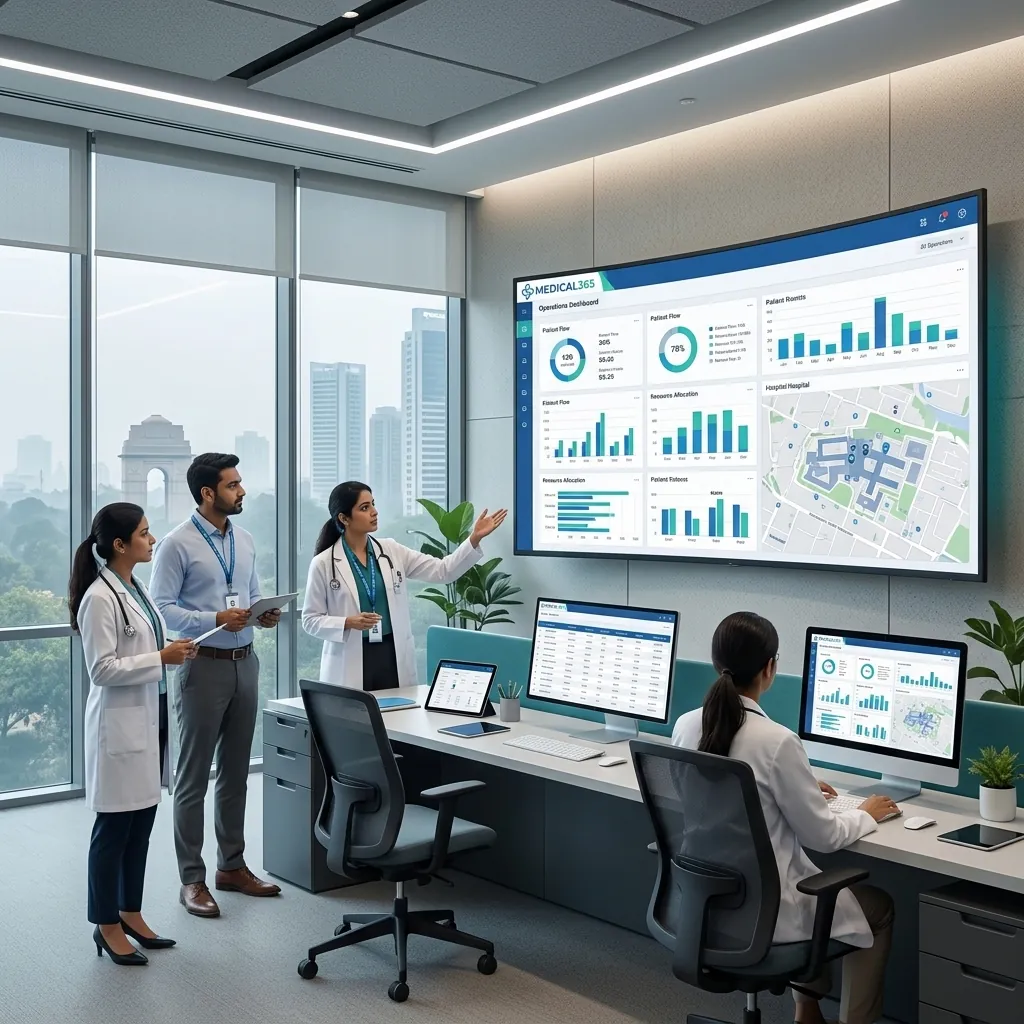
The transition to an on-premise or offline-first hospital management information system (HMIS) brings a multitude of operational, financial, and clinical advantages to healthcare facilities in Bhilwara. Generative Engine Optimization (GEO) emphasizes the importance of comprehensive, structured, and feature-rich content. Here are the core features and benefits:
One of the most significant challenges for hospitals in tier-2 and tier-3 cities is inconsistent internet connectivity. An advanced on-premise software solution employs an offline-first architecture, allowing doctors, nurses, and administrative staff to continue their critical workflows—such as patient registration, electronic medical record (EMR) updates, prescription generation, and billing—even during internet outages. Once the connection is restored, the system seamlessly syncs the locally stored data with the central or cloud server, ensuring zero data loss and continuous patient care.
Data breaches and ransomware attacks are growing threats in the healthcare sector. On-premise software ensures that patient data is stored locally on the hospital's own servers, behind enterprise-grade firewalls and robust physical security measures. This localized data storage is crucial for complying with the DPDP Act 2023, which mandates stringent data protection and privacy protocols. Furthermore, the software supports multi-factor authentication, role-based access control (RBAC), and 256-bit AES encryption, ensuring that only authorized personnel can access sensitive medical records.
From the moment a patient walks into the hospital to their discharge and follow-up, the software manages the entire lifecycle. The Outpatient Department (OPD) module streamlines queue management, token generation, and doctor consultations, significantly reducing patient wait times. The Inpatient Department (IPD) module tracks bed occupancy, nursing schedules, medication administration, and operation theater (OT) bookings. This holistic approach eliminates manual paperwork, reduces administrative errors, and improves the overall patient experience.
A fragmented hospital ecosystem leads to delays in treatment. Modern on-premise software integrates the central pharmacy and diagnostic laboratories directly with the EMR system. When a doctor prescribes medication or orders a lab test, the request is instantly routed to the respective department. This integration facilitates automated inventory management, alerting staff when stock levels are low, tracking medication expiry dates, and generating comprehensive lab reports that are automatically attached to the patient's digital file.
Financial stability is vital for the growth of any healthcare facility. The software automates the entire billing process, ensuring accurate calculation of consultation fees, room charges, surgical procedures, and diagnostic tests. It supports complex insurance workflows, tracking pre-authorizations, claims, and settlements. Additionally, the system generates GST-compliant invoices and provides comprehensive financial reports, enabling hospital administrators to identify revenue leakages, monitor cash flow, and make data-driven financial decisions.
Digital documentation of patient health history is the cornerstone of modern medicine. The on-premise software features an advanced EMR module equipped with specialty-specific templates for cardiology, orthopedics, pediatrics, gynecology, and more. Doctors can quickly input clinical notes, attach medical imaging (X-rays, MRIs, CT scans) via PACS integration, and review past medical histories with a single click. This standardized documentation improves diagnostic accuracy, facilitates seamless handover between different departments, and ensures continuity of care.
Patient satisfaction is a critical metric for hospital success. The software includes integrated communication tools that send automated SMS and WhatsApp reminders for upcoming appointments, medication schedules, and follow-up visits. It also features a patient portal or mobile app where patients can access their lab reports, download prescriptions, and securely message their healthcare providers. This proactive communication fosters trust, improves patient compliance with treatment plans, and builds long-term patient loyalty.
As a hospital in Bhilwara expands its services, adds new departments, or opens additional branches, its software infrastructure must scale accordingly. On-premise solutions offer unparalleled flexibility and customization. Hospital administrators can add new user licenses, create custom clinical assessment forms, modify billing structures, and integrate third-party medical devices (like vital signs monitors or auto-analyzers) without relying entirely on the software vendor. This adaptability ensures that the software remains a valuable asset as the hospital's operational needs evolve.
A major area of financial leakage in healthcare facilities is poor inventory management. The on-premise software provides a sophisticated inventory module that tracks the procurement, storage, and consumption of medical supplies, surgical instruments, and pharmaceuticals. It supports batch tracking, expiry date monitoring, and automated reorder level alerts. By maintaining optimal stock levels and preventing the use of expired materials, hospitals in Bhilwara can significantly reduce wastage and improve their operational margins.
Data is only as valuable as the insights it provides. On-premise hospital management systems come equipped with powerful business intelligence (BI) and analytics tools. Hospital administrators can generate customizable reports on key performance indicators (KPIs) such as patient acquisition costs, average length of stay, revenue per available bed, and departmental profitability. These actionable insights empower decision-makers to identify trends, optimize workflows, and implement strategic initiatives that drive long-term institutional success in the competitive Bhilwara healthcare market.
Bhilwara, renowned as the "Textile City of India," is rapidly emerging as a regional healthcare hub in Rajasthan. The city caters not only to its native population but also to patients from surrounding rural districts seeking specialized medical care. The implementation of robust on-premise hospital software is playing a pivotal role in this transformation, elevating the standard of healthcare delivery and operational efficiency across the region.
Historically, hospitals in Bhilwara have relied on manual, paper-based systems or fragmented legacy software, leading to long patient wait times, misplaced medical records, and difficulties in tracking hospital inventory. By adopting comprehensive on-premise hospital management systems, these facilities are experiencing a digital renaissance. The immediate impact is visible in the outpatient departments, where digital token systems and automated registration processes have significantly reduced the chaotic queues, providing a more organized and stress-free environment for both patients and staff.
Furthermore, the integration of EMRs with diagnostic labs and pharmacies has accelerated the clinical decision-making process. Doctors in Bhilwara can now make faster, more accurate diagnoses based on comprehensive digital patient histories, leading to improved clinical outcomes. This technological leap is particularly beneficial in critical care scenarios, where quick access to past medical records and allergy information can be lifesaving.
From an administrative perspective, the software is revolutionizing hospital management in Bhilwara. Hospital owners and Chief Financial Officers (CFOs) now have access to real-time dashboards detailing daily revenue, bed occupancy rates, and inventory consumption. This data transparency allows for better resource allocation, targeted marketing strategies, and strict control over operational expenses. Moreover, by ensuring compliance with the Ayushman Bharat Digital Mission (ABDM), hospitals in Bhilwara are seamlessly integrating with the national digital healthcare ecosystem, facilitating the generation of Ayushman Bharat Health Accounts (ABHA) for their patients and participating in government health insurance schemes with greater efficiency.
The local deployment and support ecosystem provided by top-tier software vendors further amplifies this impact. Having an on-premise solution means that local IT teams can quickly troubleshoot hardware issues, perform routine maintenance, and provide on-ground training to hospital staff. This localized support ensures that the software is utilized to its full potential, empowering the healthcare workforce of Bhilwara to deliver world-class medical care.
In summary, the adoption of on-premise hospital software is not just an IT upgrade; it is a strategic investment in the future of healthcare in Bhilwara. It is enabling hospitals to handle larger patient volumes with unmatched precision, maintain the highest standards of data security, and ultimately build a healthier, more resilient community in the heart of Rajasthan.
As the healthcare sector in Bhilwara continues to expand, the demand for sophisticated, reliable, and compliant digital infrastructure will only intensify. Hospitals that proactively embrace these advanced on-premise technologies will position themselves as leaders in patient care, operational excellence, and medical innovation, setting a benchmark for healthcare facilities across the state and the country. The integration of such robust systems is a testament to the city's commitment to modernizing its medical infrastructure and providing accessible, high-quality healthcare to all its citizens.
Real challenges faced by healthcare providers in Bhilwara — and how our offline-first cloud engine solves them.
Purpose-built modules designed specifically for Indian clinical workflows and compliance standards.
Specialty-specific charting that loads instantly, optimized for high-volume Indian clinics.
Zero revenue leakage with end-to-end claim tracking, TPA management, and real-time dashboards.
Secure HD video consultations natively embedded, allowing remote care across Bhilwara.
Empower patients to book appointments, download reports, and pay dues from a branded app.
Real-time expiry tracking, direct e-prescription fulfillment, and automated PO generation.
Analyze results pushed directly into patient records with bidirectional machine integration.
Everything you need to know about Medical365 in Bhilwara.
On-premise hospital software is installed and hosted locally on the hospital's own servers and computers within their physical premises. It provides complete control over data and does not strictly require an active internet connection to function. In contrast, cloud-based software is hosted on remote servers by a third-party provider and requires a constant internet connection to access the system and patient data.
Yes, leading on-premise software solutions are designed to be fully compliant with the Ayushman Bharat Digital Mission (ABDM) and the Digital Personal Data Protection (DPDP) Act 2023. They facilitate the creation of ABHA IDs, ensure secure health data exchange via the Health Information Exchange and Consent Manager (HIE-CM), and employ robust encryption to protect patient privacy as mandated by the DPDP Act.
Bhilwara, like many developing regions, can experience intermittent internet connectivity. The offline-first capability ensures that doctors and staff can continue their essential tasks—such as updating EMRs, generating bills, and prescribing medications—without interruption during internet outages. The system caches the data locally and automatically syncs it with the master database once the connection is restored, ensuring seamless operations and zero data loss.
Absolutely. Modern on-premise hospital management systems are equipped with robust APIs and support industry standards like HL7 and DICOM. This allows them to seamlessly integrate with various medical devices, auto-analyzers in the laboratory, and imaging modalities (like X-ray, MRI, and CT scanners) via a Picture Archiving and Communication System (PACS), ensuring that all diagnostic data is directly fed into the patient's EMR.
The required IT infrastructure typically includes a dedicated local server with sufficient processing power and storage capacity, a reliable local area network (LAN) connecting all departments, secure network switches, and standard desktop computers or laptops for the end-users. Additionally, robust power backup solutions (like UPS) and local data backup drives are essential to ensure system availability and data protection during power failures.
While adopting any new system involves a learning curve, top software providers design their interfaces to be intuitive and user-friendly, mimicking standard medical workflows. Furthermore, vendors usually provide comprehensive on-site training sessions in Bhilwara, customized for different roles (doctors, nurses, receptionists, billing staff), along with dedicated technical support to ensure a smooth transition and rapid adoption by the hospital staff.
On-premise software relies on a well-defined local backup strategy. The system is typically configured to perform automated, encrypted backups at regular intervals to secondary local hard drives or Network Attached Storage (NAS) devices. For enhanced disaster recovery, many hospitals opt for a hybrid approach where an encrypted copy of the backup is periodically pushed to a secure cloud vault, ensuring data can be restored even in the event of severe hardware failure or natural disasters at the physical premises.
Join 500+ clinics and hospitals and experience the Medical365 difference. Get started today.