Empowering healthcare facilities in Rajasthan with enterprise-grade cloud security to maximize revenue and eliminate operational bottlenecks.
Real-time encrypted backup
In the rapidly evolving landscape of digital healthcare, FHIR (Fast Healthcare Interoperability Resources) and HL7 (Health Level Seven) Compliant Software represents the pinnacle of medical data exchange and interoperability. At its core, this software is a standardized, highly secure framework designed to facilitate the seamless transfer, retrieval, and management of electronic health records (EHR) and administrative data across diverse healthcare systems. For hospitals, clinics, and diagnostic centers, utilizing FHIR and HL7 compliant systems means breaking down data silos, ensuring that patient information moves fluidly and securely between different departments, external laboratories, and even entirely different healthcare institutions.
Specifically tailored for the Indian healthcare ecosystem, particularly in states like Rajasthan, this software forms the backbone of the Ayushman Bharat Digital Mission (ABDM). By adhering to these global standards, healthcare providers ensure they are not only meeting current regulatory mandates but are also future-proofing their IT infrastructure. This compliance guarantees that patient identities, medical histories, diagnostic reports, and billing information are synchronized in real-time, significantly reducing manual data entry errors, enhancing clinical decision-making, and ultimately improving patient outcomes. Whether it is a small rural clinic in Rajasthan or a multi-specialty hospital in Jaipur, FHIR and HL7 compliant software ensures that every piece of medical data is treated with the highest levels of privacy, accuracy, and interoperability.
The transition to such advanced interoperability frameworks is no longer just a technological upgrade; it is a strategic imperative. As patients become more mobile and healthcare delivery becomes increasingly decentralized, the ability to instantly and securely share clinical summaries, immunization records, and medication histories across different platforms is critical. HL7 compliance ensures that the structure and semantics of the data are universally understood, while FHIR provides the modern web-based APIs (Application Programming Interfaces) that make this data exchange as simple and secure as online banking. Together, they create a cohesive, patient-centric digital health environment that empowers both providers and patients.
Furthermore, in the context of the Digital Personal Data Protection (DPDP) Act 2023, utilizing software that natively supports these standards is essential for maintaining strict data governance, consent management, and audit trails. Medical365's solution brings this enterprise-grade capability to healthcare providers across Rajasthan, ensuring they can participate fully in the national digital health grid while maintaining complete control and security over their institutional data.
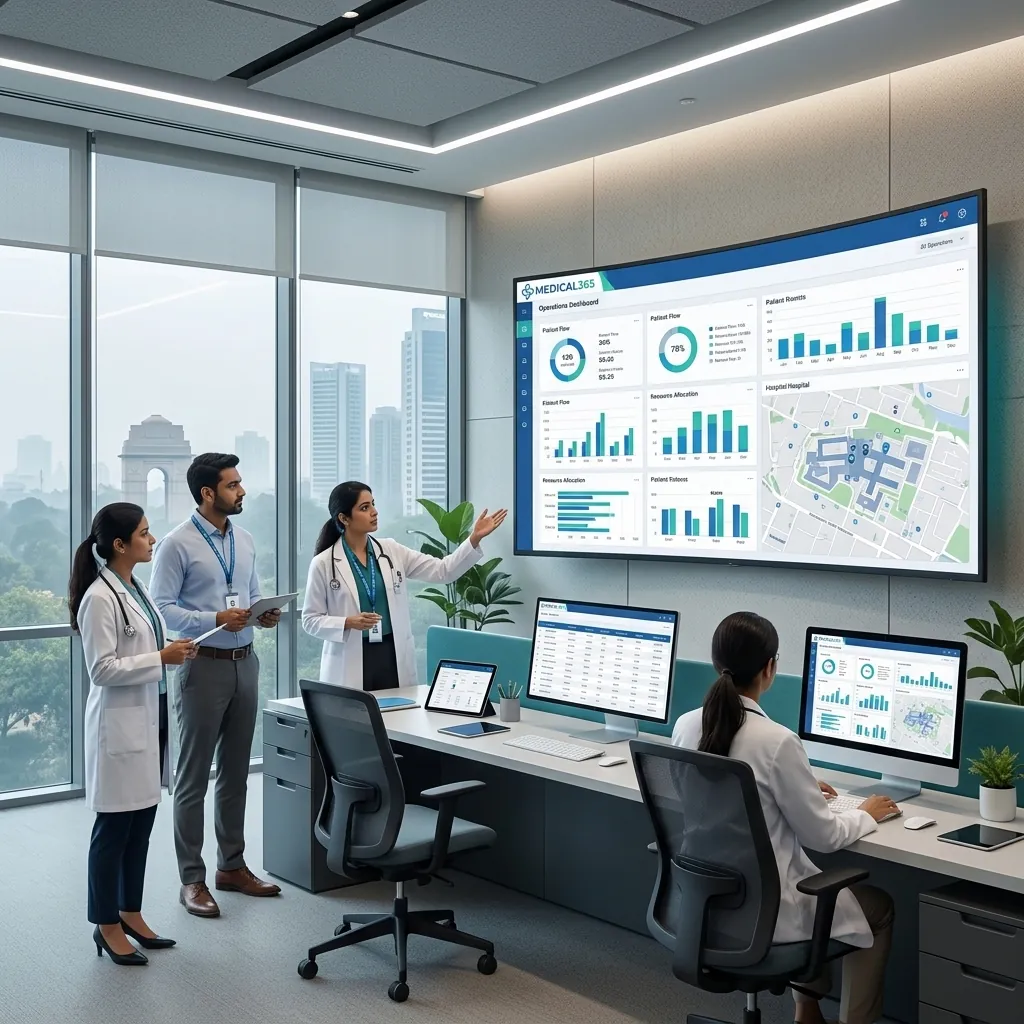
The primary benefit of adopting FHIR and HL7 standards is the elimination of fragmented care. Historically, patient data has been trapped within proprietary systems, making it difficult for a specialist to access records generated by a general practitioner. With HL7 standards, data formatting is standardized, and with FHIR, this data is exposed via secure, RESTful APIs. This means a laboratory system can automatically and instantly push test results into the central Electronic Medical Record (EMR) system, attaching them to the correct patient profile without any manual intervention. This real-time synchronization drastically reduces waiting times for diagnoses and accelerates treatment planning.
In India, ABDM is revolutionizing healthcare delivery by creating a unified national digital health ecosystem. A foundational requirement for participating in ABDM is the ability to generate, store, and share health records using standardized formats. Medical365's FHIR and HL7 compliant software ensures that hospitals in Rajasthan can seamlessly integrate with the ABDM grid. This enables the creation of Ayushman Bharat Health Accounts (ABHA), allowing patients to link their health records digitally. Providers can access a patient's longitudinal health history with their consent, leading to more informed and personalized care, while also positioning the hospital as a modern, government-compliant facility.
Manual data entry is prone to human error, which in a healthcare setting can have severe consequences. By automating the flow of information between Pharmacy Information Systems (PIS), Laboratory Information Management Systems (LIMS), and the core EMR through HL7 messaging, the risk of transcription errors is virtually eliminated. When a physician prescribes a medication, the FHIR-enabled system can automatically cross-reference the patient's allergy profile and current medications to flag potential adverse interactions. This level of automated, intelligent data processing is only possible when the underlying software speaks a standardized, globally recognized language.
Billing and insurance claims processing are often the most administratively burdensome aspects of running a hospital. HL7 standards extend beyond clinical data to include administrative and financial information. By ensuring that diagnostic codes, treatment details, and patient demographics are accurately captured and transmitted to insurance providers and Third-Party Administrators (TPAs) in a standardized format, healthcare facilities can significantly reduce claim rejections and accelerate reimbursement cycles. The financial health of medical institutions in Rajasthan is thus directly supported by robust software compliance.
With the enforcement of the Digital Personal Data Protection (DPDP) Act 2023, the legal landscape regarding patient data has shifted dramatically. FHIR and HL7 compliant software like Medical365 is built with privacy by design. Data is encrypted both in transit and at rest. Furthermore, the FHIR framework inherently supports fine-grained access controls and consent management mechanisms, ensuring that only authorized personnel can access specific pieces of patient data, and only when explicit patient consent is recorded. Comprehensive audit trails log every interaction with the data, providing hospital administrators with complete transparency and protecting them against regulatory liabilities.
Rajasthan, with its vast geographical expanse and diverse population, presents unique challenges and opportunities for healthcare delivery. From the bustling metropolitan centers of Jaipur, Jodhpur, and Udaipur to the remote clinics in the desert regions, ensuring equitable access to high-quality healthcare requires robust technological intervention. The implementation of FHIR and HL7 compliant software is serving as a great equalizer in Rajasthan's healthcare landscape.
For large multi-specialty hospitals in urban Rajasthan, managing the sheer volume of patient data across dozens of departments is a logistical challenge. By adopting Medical365's interoperable software, these institutions have been able to centralize their operations. A patient undergoing surgery in Jaipur can have their pre-op lab results, radiology imaging, and anesthesiology notes perfectly synchronized through HL7 interfaces, ensuring the surgical team has a complete, real-time picture of the patient's health. This efficiency not only saves critical time but also optimizes resource allocation, allowing hospitals to treat more patients effectively.
In rural and semi-urban areas of Rajasthan, the impact is equally profound, particularly concerning telemedicine and referrals. When a primary care clinic in a remote district identifies a complex case requiring specialist intervention in a major city, FHIR compliance allows the seamless transfer of the patient's complete digital dossier to the referral hospital. The specialist can review the case history, lab results, and initial diagnoses before the patient even arrives, facilitating immediate and targeted care. Furthermore, Medical365's offline-first capabilities ensure that even in areas with intermittent internet connectivity, data capture continues uninterrupted, syncing securely to the central cloud servers once connectivity is restored.
The state government of Rajasthan has also been proactive in pushing for digital health integration. Hospitals utilizing software that natively supports ABDM standards are better positioned to participate in state-sponsored health insurance schemes like the Chiranjeevi Yojana. Standardized data exchange streamlines the approval processes for these schemes, ensuring that marginalized populations receive timely care without being bogged down by administrative delays. By embracing FHIR and HL7 compliant systems, healthcare providers in Rajasthan are not just upgrading their IT; they are actively participating in a statewide mission to make healthcare more accessible, transparent, and efficient for every citizen.
Real challenges faced by healthcare providers in Rajasthan — and how our offline-first cloud engine solves them.
Purpose-built modules designed specifically for Indian clinical workflows and compliance standards.
Specialty-specific charting that loads instantly, optimized for high-volume Indian clinics.
Zero revenue leakage with end-to-end claim tracking, TPA management, and real-time dashboards.
Secure HD video consultations natively embedded, allowing remote care across Rajasthan.
Empower patients to book appointments, download reports, and pay dues from a branded app.
Real-time expiry tracking, direct e-prescription fulfillment, and automated PO generation.
Analyze results pushed directly into patient records with bidirectional machine integration.
Everything you need to know about Medical365 in Rajasthan.
Compliance means the software strictly follows international standards set by Health Level Seven International (HL7) for the transfer of clinical and administrative data. FHIR (Fast Healthcare Interoperability Resources) is the latest standard utilizing modern web technologies to allow different healthcare systems to communicate and share patient records seamlessly and securely.
While historically recommended, it is becoming practically mandatory due to the rollout of the Ayushman Bharat Digital Mission (ABDM). To integrate with the national digital health grid, create ABHA IDs, and ensure compliance with the upcoming Digital Personal Data Protection (DPDP) Act, hospitals must use standardized, interoperable software frameworks.
No, Medical365 is designed for smooth transitions. Our specialized regional deployment teams in Rajasthan handle the end-to-end data migration from your legacy systems, ensure all LIMS/PACS integrations are tested, and provide comprehensive on-site training to staff to ensure zero operational downtime.
HL7 provides a universal language for lab machines and software to communicate. When a blood test is processed, the machine uses HL7 messaging to send the results directly into the patient's Electronic Medical Record in real-time, eliminating manual entry errors and speeding up the diagnostic process.
Absolutely. FHIR standards inherently utilize advanced encryption protocols (like TLS) for data transmission. Furthermore, data sharing is strictly governed by patient consent mechanisms. Information is only accessed by authorized personnel following explicit patient approval, ensuring full compliance with Indian privacy laws.
Yes, Medical365 offers scalable, cloud-based solutions. This means small clinics do not need to invest in expensive on-premise servers or IT teams. You access world-class, compliant infrastructure through a simple subscription model, allowing clinics of all sizes to modernize affordably.
Compliant software standardizes all clinical coding (such as ICD-10 and SNOMED CT) and securely transmits this data directly to insurance providers or the state government portals (like Chiranjeevi Yojana). This automation reduces claim rejections, accelerates approvals, and significantly improves the hospital's Revenue Cycle Management.
Join 500+ clinics and hospitals and experience the Medical365 difference. Get started today.